
What is Driver Scoring? How It Works for Fleet Management
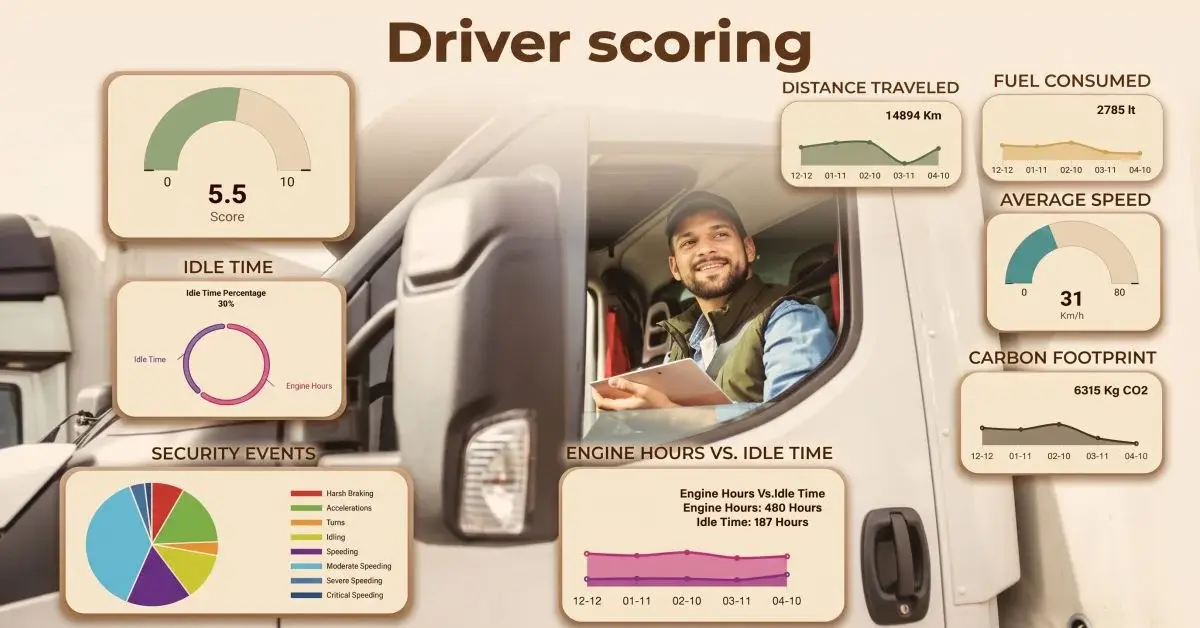
Driver scoring helps fleet managers understand how vehicles are being driven. By analyzing events such as speeding, harsh braking, rapid acceleration, and excessive idling, businesses can identify driving patterns and take action where needed.Driver Scoring Can Help You Monitor:
- Speeding
- Harsh braking
- Rapid acceleration
- Excessive idling

See How Your Drivers Are Performing
Managing a fleet is not only about knowing where your vehicles are. The way drivers operate those vehicles can affect safety, fuel use, vehicle wear, and daily operations.
Driver scoring is a system that analyzes different driving behaviors and gives drivers a score based on their performance. Instead of relying only on manual observations or complaints, fleet managers can use actual vehicle data to understand driving patterns.
A driver scoring system can monitor activities such as speeding, harsh braking, sudden acceleration, sharp cornering, and excessive idling. This information helps businesses identify driving habits that may need attention.
MuxTech uses GPS tracking technology to provide useful vehicle and driver information. With the right data, fleet managers can understand what is happening on the road and take practical steps to improve driver performance.
How Does Driver Scoring Work?
Driver scoring works by collecting information about how a vehicle is being driven. The GPS tracking device installed in the vehicle records different driving events and sends the information to the tracking platform.
The system analyzes this information and calculates a driver score based on selected driving factors.
The process generally includes:
- Collecting vehicle and driving data
- Identifying driving events
- Measuring different driving behaviors
- Calculating a driver score
- Reviewing the driver’s performance
For example, frequent harsh braking or speeding events may affect a driver’s score. A driver with fewer risky driving events may receive a higher score, depending on how the system is configured.
The exact scoring method can vary depending on the tracking system and the factors selected by the business.
What Factors Affect Driver Scoring?
Driver scores are usually based on several driving behaviors. Each factor provides information about how a driver handles the vehicle during daily operations.
Common factors include:
- Speeding: Driving above the allowed or selected speed limit can affect the driver score. Monitoring speed helps fleet managers identify repeated speeding patterns.
- Harsh Braking: Sudden braking can indicate aggressive driving or poor following distance. Frequent harsh braking events may have an impact on the overall score.
- Rapid Acceleration: Sudden acceleration can put additional stress on the vehicle and may indicate aggressive driving behavior.
- Harsh Cornering: Taking turns at high speed or making sharp turns can affect vehicle stability and safety. Tracking these events helps identify risky driving patterns.
- Excessive Idling: Keeping a vehicle running while it is stationary for long periods can waste fuel and increase unnecessary engine use.
Why Driver Scoring Matters for Fleet Management
Knowing where a vehicle is does not tell you everything about how it is being driven. Driver scoring gives fleet managers a clearer view of driving habits and helps them spot patterns that may need attention. This is especially useful for fleets with several vehicles and drivers, where manual monitoring alone may not be practical.
Unsafe or aggressive driving may increase the chances of accidents, while poor driving habits can also contribute to fuel waste and faster vehicle wear. Driver scoring helps address these issues by giving businesses a way to:
- Monitor individual driver performance
- Identify repeated risky driving habits
- Compare driving behavior over time
- Review driving events and reports
- Provide feedback based on actual data
- Support driver training
The goal is not simply to give a driver a number. The score should help managers understand driving behavior and use that information for better fleet management.
How GPS Tracking Supports Driver Scoring
GPS tracking plays an important role in collecting the information needed for driver scoring. A GPS tracking device can provide data about vehicle location, speed, movement, and other driving events, depending on the device and system being used.
When this information is available through a tracking platform, fleet managers can review driver activity without depending entirely on manual monitoring.
GPS tracking can help you:
- Monitor vehicle speed
- Review routes and movement
- Identify driving events
- Track vehicle activity
- View historical driving information
This makes it easier to connect driver behavior with actual vehicle activity.
Use Driver Scores to Improve Driving Habits
A driver score is most useful when businesses use it as a tool for improvement. Simply checking a score without understanding why it changed does not provide much value.
Fleet managers can review the events behind a driver’s score and discuss specific areas that need improvement.
For example, if a driver regularly receives speeding alerts, the manager can discuss speed management and route conditions with the driver. If harsh braking occurs frequently, the business can review whether it is linked to driving habits, traffic, or road conditions. This creates a more practical approach to improving driver performance.
Perfect for Different Types of Fleets
Driver scoring can be useful across different types of fleets, as each business has its own driving challenges:
- Delivery companies: Frequent stop-and-go driving makes harsh braking and idling worth tracking closely.
- Logistics businesses: Long-haul routes can benefit from monitoring speeding, harsh braking, and other driving events.
- Transport companies: Passenger safety raises the stakes on smooth acceleration and cornering.
- Construction companies: Heavier vehicles amplify the wear caused by harsh driving events.
- Field service businesses: Frequent short trips across a service area make consistent driver habits easier to compare.
- Rental and commercial vehicle fleets: Scoring helps protect vehicle conditions across multiple drivers.
Whether you manage a few vehicles or a larger fleet, driver scoring can provide useful information about how vehicles are being operated.
Practical Ways Businesses Can Use Driver Scores
Driver scores can be used in different ways depending on the needs of the business. The most useful approach is to connect the score with regular fleet management activities.
Businesses can use driver scoring to:
- Review Fleet Trends: Looking at driver data across the fleet can help managers identify common issues that may require wider training or operational changes.
- Provide Driver Feedback: Managers can discuss specific driving events with drivers and explain where improvements may be needed.
- Identify Training Needs: If certain behaviors appear repeatedly, additional driver training may be useful.
- Monitor Performance Over Time: Reviewing scores regularly can show whether driving habits are improving or changing.
- Recognize Better Driving Habits: Businesses can use driver data to recognize drivers who consistently maintain safer and smoother driving patterns.
Better Data, Better Fleet Management
Every trip creates useful information about how a vehicle is being driven. With MuxTech GPS tracking, businesses can review this data, understand driver behavior, and find areas where changes may be needed.
MuxTech GPS tracking helps businesses monitor vehicle activity, review driving events, and better understand driver performance.
Contact MuxTech to learn how GPS tracking and driver scoring can support your fleet management needs.