
GPS Tracker Battery Life: How Long It Lasts and How to Extend It
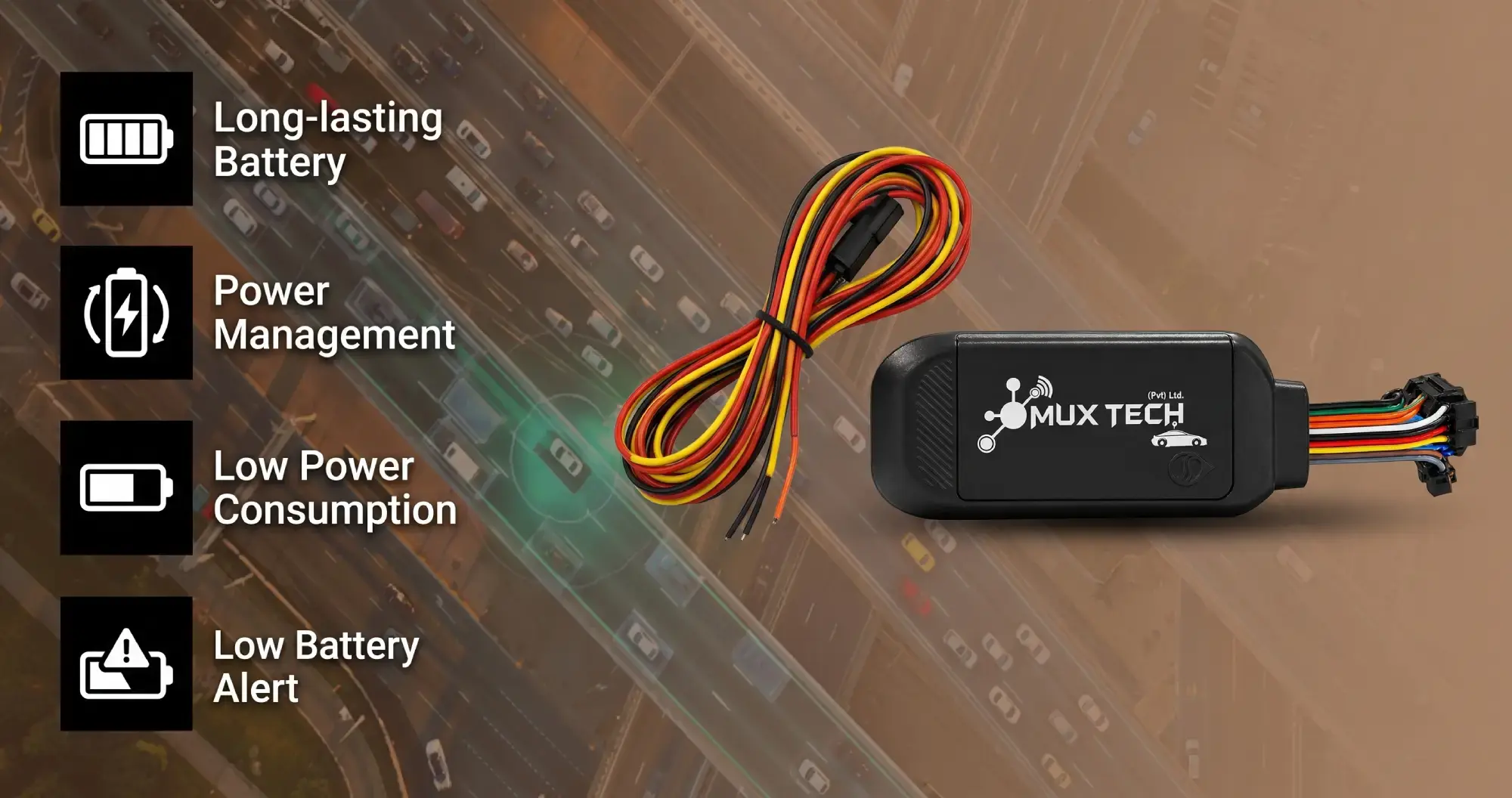
How long will your GPS tracker keep working before its battery runs out? Whether you’re tracking a delivery truck, a parked trailer, or your family car, a dead tracker battery can leave you without the location updates you need. Frequent charging, unexpected battery warnings, and power loss can also make tracking less reliable.
The good news is that GPS tracker battery life depends on several factors you can understand and manage. The device’s power source, location update frequency, standby mode, and daily usage all affect how long it lasts.
In this guide, you’ll learn what affects GPS tracker battery life, how to extend it, whether a GPS tracker can drain your car battery, and how to troubleshoot common power problems.

What Determines GPS Tracker Battery Life?
There are several factors that have the greatest influence on the GPS tracker battery life. Specifically,
- Power Source
- Reporting Interval
- Standby Time
- Usage Patterns
Below is a quick overview of each factor, followed by guidance on choosing a tracker with the right power source and reporting interval.
Power Source: Hardwired, Plug-in, or Rechargeable Battery
Hardwired GPS Trackers
Hardwired GPS trackers do not require recharging because they are powered by the vehicle’s battery. Most also have a built-in backup battery, so the device keeps working for a while after the vehicle is turned off. They are best suited to continuous tracking.
OBD-II and Plug-in GPS Trackers
OBD-II GPS trackers are also powered by a vehicle battery. They are easier to install since they use the car’s diagnostic port. Both hardwired and OBD-II trackers are best suited for vehicles. Plug-in GPS trackers are also available, but unlike hardwired options, they require regular recharging.
Long Battery Life GPS Trackers
Long battery life GPS trackers usually have a built-in battery. These devices allow users to track infrequently moving objects such as containers, semi-trailer trucks, or equipment over long periods.
GPS Trackers With Rechargeable Batteries
GPS trackers with rechargeable batteries use a Li-ion or Li-Po battery. The main advantage of such trackers is the ability to remain portable and hidden. They need to be charged periodically.
Other Long-Life Battery Options
There is also a variety of GPS trackers with long battery life. Some have a built-in battery that allows them to operate for long periods of time between charges. Such devices are useful for low-frequency tracking of assets that are not checked or driven often.
The GPS tracker battery life depends on several factors that need to be taken into account when selecting a device:
Reporting Interval: How Often a GPS Tracker Sends Location Updates
Why Reporting Frequency Matters
Every time the GPS tracker sends an update on its location, the device’s receiver and cellular modem wake up to identify the current coordinates. Consequently, these two elements consume the most power. This is why the frequency of reporting has an enormous impact on the GPS tracker’s battery life.
How to Choose the Right Reporting Interval
The less often the device sends location data, the more time it spends in a dormant state, and the longer its battery lasts. The choice of the time interval depends on the specific use case and the GPS tracker’s specifications. The recommended frequency depends on how often the asset moves, so choose the longest interval that still meets your needs.
Examples and General Guidelines
For example, a GPS tracker used to monitor the location of a courier vehicle may update its position every few seconds. Simultaneously, a GPS tracker monitoring a trailer in a shipping yard may rarely move and update its location every hour. However, as a rule of thumb, the longer the time interval between two consecutive reports, the greater the battery life of a GPS tracker is.
The GPS tracker battery life also depends on:
Standby Time: How Long a GPS Tracker Can Stay Inactive
Standby time is often highlighted in the GPS tracker specs, which can be misleading. A GPS tracker’s standby time refers to how long the battery can hold the charge. However, the actual value depends significantly on the following factors:
- The time between reports
- Signal strength
- And whether the device is in motion or in sleep mode.
So, when you decide to buy a GPS tracker and see the number referring to how long it can last in standby, pay close attention to the fine print. The number is most likely the theoretical maximum, which is achieved when the device is not sending any updates, using any additional functionality, and has a strong cellular signal.
When choosing a GPS tracker, consider how long it can stay in sleep mode, which uses the least amount of power.
Usage Patterns: How and Where You Use the GPS Tracker
Two GPS trackers can perform the same amount of work, but one of them can discharge much faster. This is due to the following reasons:
- Movement: Constant movement keeps the tracker reporting more often, which uses more power
- Signal strength: The weaker the signal, the more power the cellular modem uses to establish a connection
- Extreme temperatures: High or low temperatures can also affect the battery life of a GPS tracker
- Additional functionality: The use of geofencing, position history, or other features also affects the battery life of a GPS tracker.
If your GPS tracker discharges much faster than expected, there is a high probability that the reason is the conditions in which it is used.
How to Extend GPS Tracker Battery Life
To maximize the battery life of a GPS tracker, you can take the following measures:
- Set a longer reporting interval to reduce the number of updates the device sends
- Enable the option to use motion or sleep modes if available
- Place the GPS tracker according to the manufacturer’s recommendations to get a stable signal
- Avoid placing GPS trackers inside metal casings to ensure a strong GPS and cellular signal
- Update the firmware to benefit from improvements and bug fixes provided by the manufacturer
- Charge the GPS tracker properly according to the manufacturer’s recommendations
- Disable any additional functions not needed for your application
Can a GPS Tracker Drain a Car Battery?
A hardwired GPS tracker will normally drain a car battery much more slowly than a portable one. Moreover, a properly installed GPS tracker should have a built-in sleep mode that turns on the GPS receiver only when necessary.
However, there are some cases when a GPS tracker can drain a car battery:
- The vehicle was turned off for a long time, and the GPS tracker was not in sleep mode
- The car battery is already weak and cannot power the GPS tracker
- An improperly installed GPS tracker that does not have a sleep mode
- High frequency of reports sent by the GPS tracker even when the vehicle is parked
To avoid the car battery from being drained by the GPS tracker, make sure the following conditions are met:
- The GPS tracker has a built-in sleep mode that minimizes battery consumption
- The GPS tracker has a low voltage cut-off function that allows it to turn off when the car battery is nearly depleted
- The GPS tracker is professionally installed and has a fuse
- The car battery is in a good condition
If you are installing a GPS tracker on a vehicle that will not be used for a long time, choose a device that has its own battery or the ability to enter a deep sleep mode.
How to Troubleshoot GPS Tracker Battery Problems
Battery Drains Within a Day or Two
If your GPS tracker discharges within a day or two, the first step is to check the time interval and make sure your GPS tracker does not run in an area with a weak cellular signal. Moreover, make sure that the sleep mode is enabled.
Battery Percentage Drops Quickly
If the battery percentage shows some value, but then quickly drops to zero, you need to check the battery health and settings according to the official instructions. Cold temperatures and an old battery can affect the GPS tracker’s performance.
GPS Tracker Does Not Charge
If the GPS tracker does not charge, make sure that the cable and charger are not faulty. Also, check the GPS tracker contacts for dirt or damage. If nothing helps, try another charger and power source.
Hardwired Tracker Goes Offline
If the GPS tracker goes offline when hardwired, make sure that the GPS tracker is properly installed and the connections are secure. A bad connection can cause unstable power supply and intermittent failures.
Car Battery Is Dead
If the car battery is dead because of the GPS tracker, make sure that the GPS tracker is properly installed and is not connected to a circuit with insufficient amperage. Moreover, double-check the sleep mode settings and the GPS tracker’s amperage. If nothing helps, contact a professional to measure the parasitic current.
Issue Still Not Resolved
If none of these fixes work, review the common problems in GPS tracking systems or contact the customer support team. Battery drain issues often occur in older devices, so it might be time to replace your GPS tracker if it is not working properly.
How to Choose a GPS Tracker With MuxTech
Start With Your Purpose
When choosing a GPS tracker, the primary consideration should be its purpose. The choice of the power source and reporting interval is dictated by the use case. MuxTech can help you choose the right tracker in a few clicks.
Get Help With Location and Settings
MuxTech also offers professional help in choosing the optimal location and settings for the GPS tracker. First of all, it is important to clearly define the requirements and expectations for the GPS tracker. You also need to provide information about the asset that will be monitored so that a specialist can recommend the best option. When you contact the MuxTech support team, you can tell them what you are tracking, how much it can move, and how often you need to check the location. This information will help you choose the device and set the report interval accordingly.
Check the Specifications
To determine the battery life of a GPS tracker, you can consult the specification provided for each model. Pay attention to the GPS tracker’s power source, reporting interval, and standby time, since these three values dictate the battery life. Note that a hardwired GPS tracker will not require recharging since it receives power directly from the vehicle’s battery.