Car Tracker vs Bike Tracker: Features, Cost And Benefits
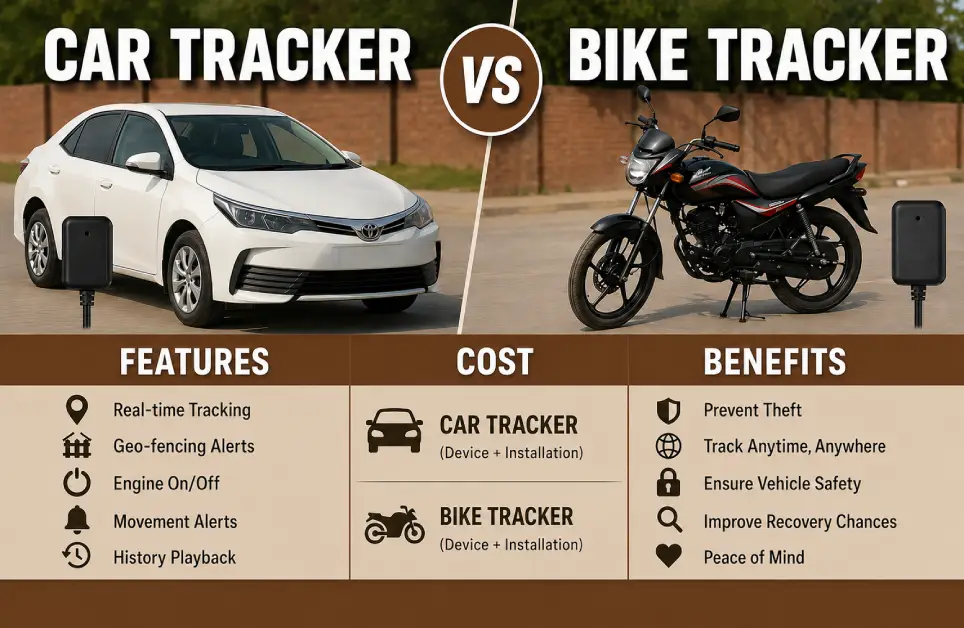
A GPS tracking system is essential for both car and motorcycle owners because of the rising vehicle theft, unauthorized usage, and the need for real-time monitoring. Choosing the right vehicle tracker is mandatory whether you own a personal vehicle, manage a fleet, operate a delivery business, or want to add an extra layer of security. It is a common question for most people: Should I buy a car tracker or a bike tracker? Both of these devices serve different vehicles but have different features, real-time tracking, installation methods, and costs. This guide gives a clear comparison between a car and bike tracking system and helps you identify which one suits your needs.
What Is A Car Tracker?
It is a GPS tracking device that is designed for cars, SUVs, vans, and other commercial vehicles. It includes the use of GPS satellites and the cellular networks that give real-time location tracking, trip history, driver monitoring, and security alerts.
An advanced car tracking system gives telematics features that go beyond basic location tracking.
Common Features Of Car GPS Trackers
- Real-time vehicle tracking
- Live location monitoring
- Ignition on/off alerts
- Geo-fencing alerts
- Route playback
- Driver behavior monitoring
- Speed alerts
- Fuel monitoring integration
- Engine immobilization
- Fleet management compatibility
Car Trackers Are Widely Used By:
- Individual car owners
- Fleet operators
- Taxi companies
- Logistics businesses
- Rental car companies
- Corporate fleets
What Is a Bike Tracker?
A bike tracking system is also known as a motorcycle GPS tracker. It is designed specifically for motorcycles, scooters, electric bikes, and delivery bikes. It is undeniable that motorcycles have higher chances of theft and limited space for installation. Therefore, motorbike tracking devices are a critical requirement for it that are small, more compact, and better suited for the two-wheelers.
Common Features Of Bike Tracking Systems
- Real-time bike tracking
- Theft alerts
- Tamper notifications
- Geo-fencing
- Remote engine cut-off (selected models)
- Parking alerts
Bike Trackers Are Commonly Used By:
- Motorcycle owners
- Delivery riders
- Courier companies
- Food delivery services
- E-bike owners
- Scooter owners
Car Tracker Vs Bike Tracker: Key Differences
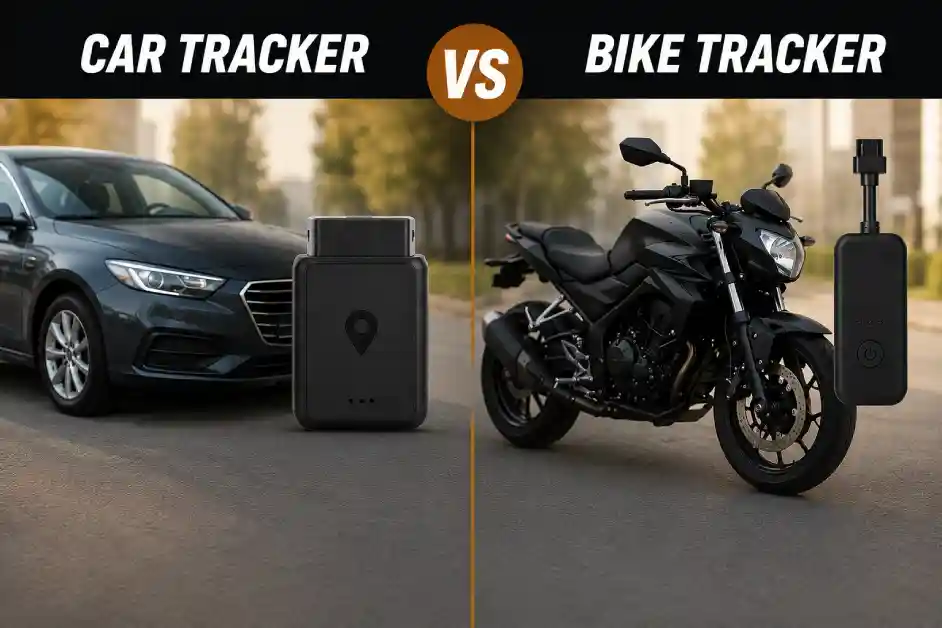
In this guide, you’ll learn about the key comparisons between the trackers for cars and bikes. It is advised to understand your needs and preferences before choosing one for your vehicles.
1. Vehicle Security & Theft Protection
Theft prevention is the bigges treason people install a tracker. When it comes to car tracking devices, they provide complete vehicle security through an engine cut-off functionality, ignition monitoring, driver identification, and unauthorized movement alerts. Bikes are an easy target for thieves because of their lightweight nature. Bike tracking focuses on instant theft alerts, motion detection, parking protection, and hidden installation.
2. GPS Tracking Features Comparison
Car tracking offers advanced features like real-time tracking, fleet management, driver behavior analysis, fuel monitoring, maintenance reminders, and route optimization. While the motorcycle tracking system offers features like live tracking, geo-fencing, mobile tracking apps, parking alerts, and theft recovery,
3. Installation Comparison
Car tracking devices are installed within 30-60 minutes and under the dashboard, near the vehicle battery and inside a hidden compartment. Trackers for bikes need a compact installation because of limited space. Some common installation spots include under the seat, inside side panels, and battery compartments.
4. Real-Time Tracking Accuracy
Both trackers use the satellite-based GPS technology, but there are some factors that affect accuracy. It includes network coverage, tracker hardware, environment conditions, and hardware quality. The features offered by both devices are live tracking, mobile app access, route history, and geofence alerts.
5. Cost Comparison
Budget and cost are the main things most buyers ensure before making a decision. Generally, car tracking offers additional sensors, advanced telematics, fleet features, and driver analytics. Therefore, it is typically expenses based on hardware cost, installation charges, and platform fees. While the tracking system for bike are more affordable, including compact hardware, simpler functionality, and lower installation costs.
Benefits Of Car GPS Trackers
- A car GPS tracker is helpful to protect vehicles against theft and unauthorized usage.
- It helps in driver behavior monitoring, like harsh braking, excessive speeding, and route deviations.
- It is beneficial for fleet management optimization, improved efficiency, and reduced operational costs.
- It reduces the fuel cost by fuel theft analysis, excessive idling, and inefficient routes.
Benefits Of Bike GPS Trackers
- It reduces vehicle theft by dramatically improving the recovery chances.
- It gives real-time rider monitoring, including locations, delivery routes, and arrival times.
- It is an affordable security solution that offers high-value protection at a relatively low cost.
- It offers peace of mind by allowing you to monitor the location anytime.
Which Tracker Is Better for Personal Use?
It is advised to choose a car tracking system if you:
- Own a car or SUV
- Need driver monitoring
- Want fuel monitoring
- Require detailed vehicle reports
Bike tracking should be your choice if you:
- Own a motorcycle
- Park frequently in public areas
- Want anti-theft protection
- Need affordable tracking
Final Verdict
It entirely depends on the vehicle type, budget, needs, and preferences, if you want to make a decision between these trackers. A car GPS tracking system is a better option for business operations, fleet management, fuel control, and driver monitoring. You should choose a bike tracker if your primary concern is theft protection and affordability.